
Call us now :08045801569
 Send Inquiry
 Send Inquiry
PM-250 Dustguard Particulate Monitor
Price 110000 INR/ Piece
MOQ : 1 Piece
PM-250 Dustguard Particulate Monitor Trade Information
- Minimum Order Quantity
- 1 Piece
- Payment Terms
- Telegraphic Transfer (T/T)
- Supply Ability
- 10 Pieces Per Month
- Delivery Time
- 3 Week
- Sample Available
- Yes
- Sample Policy
- Within a certain price range free samples are available
- Packaging Details
- As per companies standards
- Main Export Market(s)
- Middle East, Africa, Asia
- Main Domestic Market
- All India
- Certifications
- CMRI approved enclosure
About PM-250 Dustguard Particulate Monitor
Dustguard Particulate Monitor
If a Process Trend Monitor and Multi-Purpose Dust Alarm with display is necessary in your facility, then use this dustguard particulate monitor system. This monitoring instrument can continuously monitor indicative dust in real time with an additional capability of logging and alarm. Your monitoring requirements can be met with this low cost solution.
Features of Dustguard Particulate Monitor PM-250:
- There are no moving parts in this instrument, which is why it can be installed with ease and in no time.
- This monitoring system requires low capital investment and maintenance cost.
- This highly sensitive instrument can be calibrated to show emission levels in mg / m3.
- It can be adjusted, from 1-1,000 mg/m3.
- The minimum detection limit of this instrument is less than 1 mg/m3.
Technical Specification
| Technique | Tribo Electric charge transfer |
| Sensitivity | Adjustable over a wide dynamic range |
| Operating Temp (Gas). | -15 to 250 Degree C (T Model up to 700 Degree C ) |
| Ranges | 1-1,000 mg/m3 |
| Response Time | Instantaneous |
| Duct Diameter | 25 mm to 2.2 m |
| Positioning | 90 Degree C to Duct Wall |
| Output connector | Single Flat Flanged Fitting |
| Material of Construction | SS316 |
| Probe Length | 25, 100, 250, 500, 750, 1000 mm |
| Probe Diameter | 16 mm |
| Insulation | PTFE (T Model - Glass Ceramic) |
| Type | WP Aluminum casting |
| Size | 115 x 65 x 55 mm |
| Output | 3 wire 4-20 mA |
| Area | Suitable for Hazardous areas |
| Alarms | Green - Normal |
| Averaging Time | Yellow - Warning |
| Output - Remote Alarm | Red - High Alarm |
| Output - Remote data (Optional) | Programmable |
| Output | & 4 - 20 mA |
| Digital out (Optional) | RS 232 / RS 485 |
| Housing | ABS Polycarbonte |
Technical Details 
Enhanced Accuracy and Efficiency
The PM-250 Dustguard Particulate Monitor delivers highly accurate readings within a 2% margin of error, supporting compliance and worker safety in industrial settings. Its energy-efficient operation, using only 3 watts of power, ensures low operational costs for long-term usage.
Durable SS 316 Construction
Manufactured from corrosion-resistant SS 316 stainless steel, the monitor is designed for long-term performance. This material withstands harsh industrial environments and chemical exposure, ensuring reliable operation and minimal maintenance.
FAQ's of PM-250 Dustguard Particulate Monitor:
Q: How does the PM-250 Dustguard Particulate Monitor operate?
A: The monitor works by continuously measuring airborne particulate concentration within its detection range of 0-1000. It is powered by a 230 V AC, 50 Hz supply and requires only 3 watts for operation, making it suitable for continuous, efficient monitoring.Q: What are the installation requirements for this particulate monitor?
A: The PM-250 is compatible with pipelines or ducts sized between 200 mm and 1000 mm. Its compact design and SS 316 material allow for easy installation in various industrial environments, while providing exceptional durability.Q: When should I use this particulate monitor in my facility?
A: This monitor should be employed wherever accurate real-time measurement of airborne particulates is crucial, such as during manufacturing processes, emission monitoring, or in environments where dust levels must be controlled for safety or regulatory compliance.Q: Where is the PM-250 Dustguard manufactured and supplied from?
A: The PM-250 Dustguard Particulate Monitor is produced, exported, and supplied by a reputable manufacturer in India, serving both domestic and international industrial markets.Q: What is the process for maintaining the PM-250 Particulate Monitor?
A: Due to its stainless steel SS 316 construction, minimal maintenance is required. However, periodic inspections and cleaning of the sensor, as well as verification of connection integrity, are recommended to ensure optimal performance.Q: What are the primary benefits of using this monitor?
A: The chief benefits include high measurement accuracy, energy efficiency, robust construction, and broad size compatibility, all contributing to safer workplaces and compliance with air quality standards.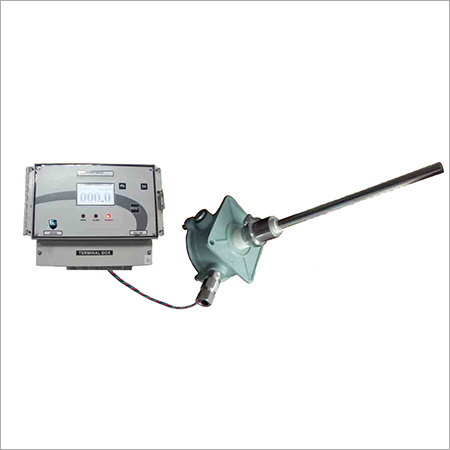
Tell us about your requirement

Price:
Quantity
Select Unit
- 50
- 100
- 200
- 250
- 500
- 1000+
Additional detail
Mobile number
Email

More Products in Dust Monitor Category
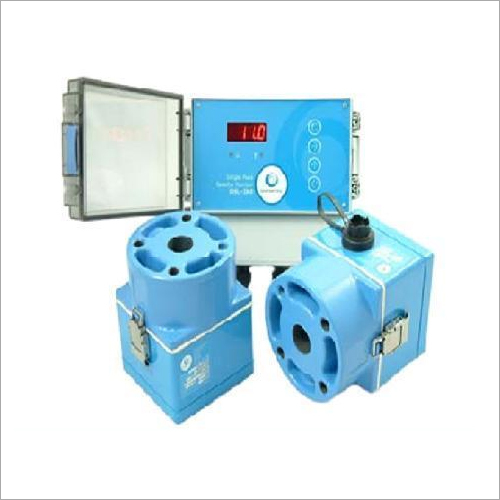
Dust Opacity Monitor
Price 350000 INR / Piece
Minimum Order Quantity : 2 Pieces
Weight : Approx. 68 kg
Power : 24 V DC Volt (v)
Material : Mild Steel (Powder Coated)
Surface : Powder Coated
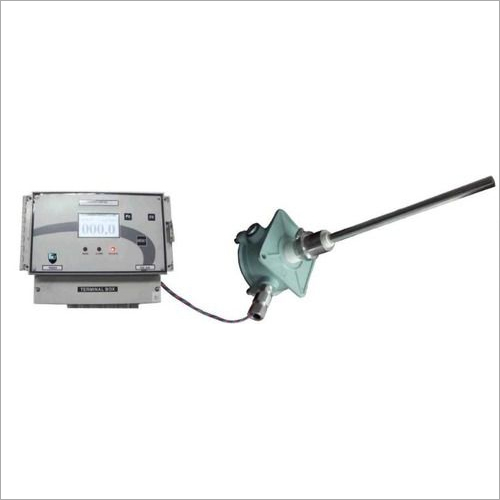
Dust Particulate Monitor
Price 350000 INR / Piece
Minimum Order Quantity : 1 Piece
Weight : 3000 Grams (g)
Power : 24 V DC Volt (v)
Material : Ms
Surface : Smooth

 Send Inquiry


Our Products


25/N, Laxmi Industrial Estate, New Link Road, Andheri (W), Mumbai - 400053, Maharashtra, India

Mr Shubhankit G Tiwari
(Sr. Application Engineer )
Mobile :08045801569
 Send Inquiry
 Send SMS
Developed and Managed by Infocom Network Private Limited.
 English
 Spanish
 French
 German
 Italian
 Chinese (Simplified)
 Japanese
 Korean
 Arabic
 Portuguese