
Call us now :08045801569
 Send Inquiry
 Send Inquiry
Continuous Ambient Gas Monitoring Systems
Price 850000 INR/ Piece
MOQ : 1 Piece
Continuous Ambient Gas Monitoring Systems Specification
- Mounting Type
- Wall-mounted or pole-mounted
- Operating Mode
- Continuous real-time monitoring
- Size
- Approx. 400 mm x 300 mm x 150 mm
- Interface
- Graphical LCD display with keypad, web-based user interface
- Connectivity Type
- Ethernet, GSM, RS485, and USB
- License Free
- No
- Antenna Type
- External GSM/4G antenna (for wireless communication models)
- Standard
- Complies with CPCB guidelines, ISO 9001:2015, and CE certified
- Technology
- Electrochemical, NDIR (Non-Dispersive Infrared), PID (Photo Ionization Detector), catalytic bead, and semiconductor sensors
- Special Features
- Real-time monitoring, inbuilt data logger, remote alert notification, multi-gas detection, weatherproof enclosure, and auto calibration
- Application
- Industrial plants, ambient air quality monitoring, refineries, environmental safety, public health, urban monitoring
- Screen Resolution
- 128 x 64 LCD graphical display
- Power Supply
- 230 V AC 10%, 50 Hz or optional 24 V DC
- Output Formats
- 4-20mA, RS485 MODBUS, Ethernet, USB, relay output
- Supported Gases
- SO2, NO2, CO, O3, PM2.5, PM10, H2S, NH3, VOCs, and custom options
- Enclosure Protection
- Weatherproof, IP65 rated
- Data Storage
- Onboard memory up to 1 year (1-minute interval logs)
- Alarm System
- Programmable audio-visual alarms and remote SMS/email alerts
- Detection Range
- Parts per million (ppm) and parts per billion (ppb) depending on sensor configuration
- Calibration
- Manual and automatic calibration supported
- Operating Temperature
- -10C to +50C
- Response Time
- Less than 30 seconds
- Sampling Method
- Diffusion or optional aspirated sampling
Continuous Ambient Gas Monitoring Systems Trade Information
- Minimum Order Quantity
- 1 Piece
- Payment Terms
- Telegraphic Transfer (T/T)
- Supply Ability
- 10 Pieces Per Week
- Delivery Time
- 3 Week
- Main Export Market(s)
- Eastern Europe, Western Europe, Middle East, Central America, Africa, South America, Asia, North America, Australia
- Main Domestic Market
- All India
- Certifications
- CE
About Continuous Ambient Gas Monitoring Systems
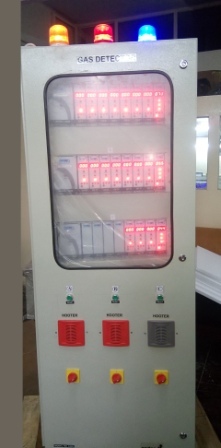
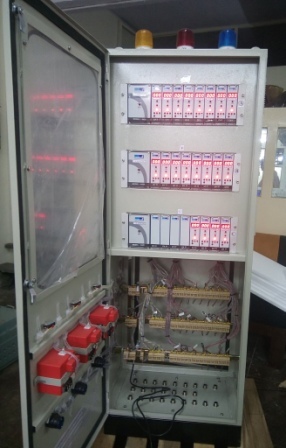
Continuous ambient gas monitoring system is a microprocessor based gas detection system that can be used for evaluating the input coming from distantly located toxic, combustible or oxygen detector transmitters. It can continuously monitor a range of ordinary atmospheric hazards without any interruption. The system uses point to point writing edifices, in which all shutdown devices, detector heads and remote system are connected separately to the control unit.
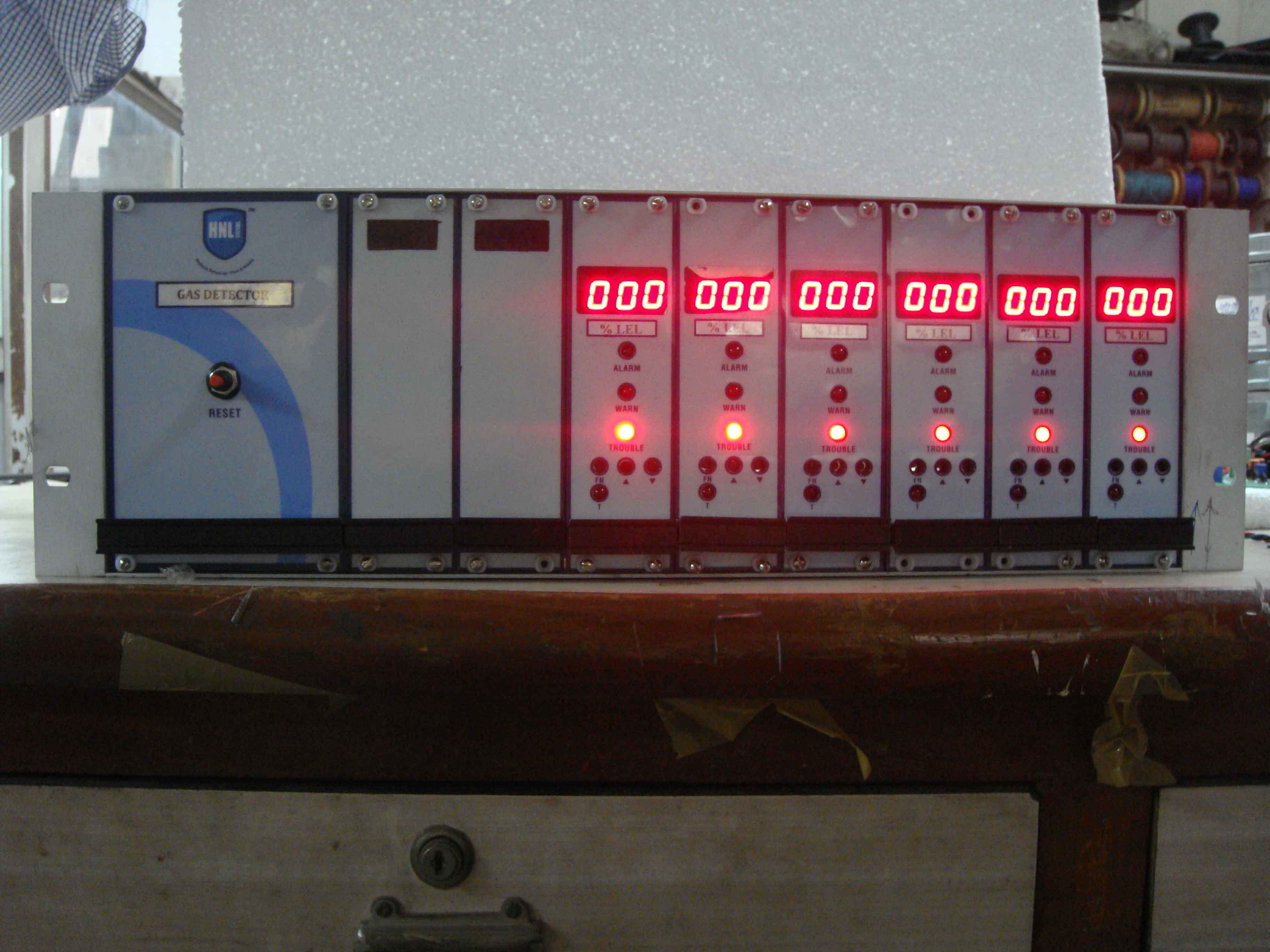
This instrument is ideal for small systems, which is typically less than 20 points. The sensor of this instrument is close to the central control unit. It is configured for simple expansion through the plugs situated in sensor modules. One can access TX 250 transmitters with explosion and weather proof versions. Both these versions come with digital readouts and without digital readouts. There are bright LED alarm light indicants, two independently adaptable alarm set points in every channel and low & high alarm conditions. The channel and common specific 4-20mA analog signals enable communication between sensor data and different other systems. An extra 'Test' button is to duly check coherence in the modular card.
pecifications :
- Type : Rack /Panel Mounted
- Power Supply : 230 V AC, 50Hz
- Display : Digital Continuous , 7 Segment - Red
- Indications : Fault , Low , High
- Output : - 4-20 mA linear , relay -from each channel
- Sensor Technology : Supports all type of sensor output
- Accuracy : +/-2% of FS
- Enclosure : Rigid Aluminum
Versatile, Multi-Gas Detection
This monitoring system is designed for diverse applications, detecting multiple gases and particulates including SO2, NO2, CO, O3, PM2.5/PM10, H2S, NH3, VOCs, and other custom gases. Sensor technologies like Electrochemical, NDIR, PID, catalytic bead, and semiconductor ensure accurate readings for a wide range of air quality scenarios.
User-Friendly Design and Operation
With a 128 x 64 LCD graphical display and a keypad or web-based interface, the system is intuitive to use. Mounting options include wall and pole installation, enabling flexible deployment in industrial plants, refineries, public health sites, and urban environments. Remote access via Ethernet, GSM, and web portal enhances convenience.
Reliable Alerts and Data Logging
Programmable audio-visual alarms and remote SMS/email notifications provide immediate alerting in case of threshold exceedances. The inbuilt data logger captures up to one year of data at 1-minute intervals, supporting traceability and compliance. Multiple output formats facilitate easy system integration and reporting.
FAQ's of Continuous Ambient Gas Monitoring Systems:
Q: How does the monitoring system detect gases at both ppm and ppb levels?
A: The system uses advanced sensor technologies, such as Electrochemical, NDIR, PID, catalytic bead, and semiconductor sensors. These allow for detection sensitivity at both parts per million (ppm) and parts per billion (ppb) depending on the configured sensor, ensuring precise ambient air quality monitoring.Q: What is the data storage capacity and retrieval process for logged environmental data?
A: The onboard memory can store up to one year of continuous data at 1-minute intervals. Data can be retrieved through USB, Ethernet, or remotely via GSM and web interface, ensuring secure and efficient access for analysis and reporting.Q: When and how are alarms triggered and communicated by the system?
A: Alarms are fully programmable-audio-visual alerts activate locally when thresholds are exceeded, while remote notifications, like SMS and email alerts, are sent simultaneously to designated contacts. This ensures prompt response to hazardous conditions any time they occur.Q: Where can this continuous gas monitoring system be installed?
A: Installation is suitable for various environments including industrial plants, refineries, public health facilities, urban monitoring stations, and outdoor locations. Weatherproof, IP65-rated enclosures and flexible mounting options (wall or pole) support deployment in harsh or demanding conditions.Q: What is the calibration process and how does auto calibration benefit users?
A: The system supports both manual and automatic calibration, using reference gases or standard procedures. Automatic calibration minimizes manual intervention, maintains accuracy, and assures reliable operation over time.Q: How is the system powered and what are the power supply options?
A: Standard units operate on 230 V AC 10%, 50 Hz, with an optional 24 V DC supply available. This accommodates different site power requirements, enhancing adaptability for varied installations.Q: What are the main benefits of choosing this gas monitoring system?
A: Key advantages include real-time, multi-gas detection, robust data logging, instant remote alerts, compliance with CPCB and international standards, weatherproof design, and flexible connectivity. These features promote safety, regulatory adherence, and operational efficiency.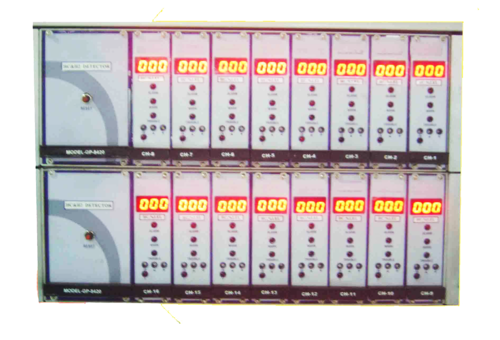

Tell us about your requirement

Price:
Quantity
Select Unit
- 50
- 100
- 200
- 250
- 500
- 1000+
Additional detail
Mobile number
Email

More Products in Gas Monitor Category
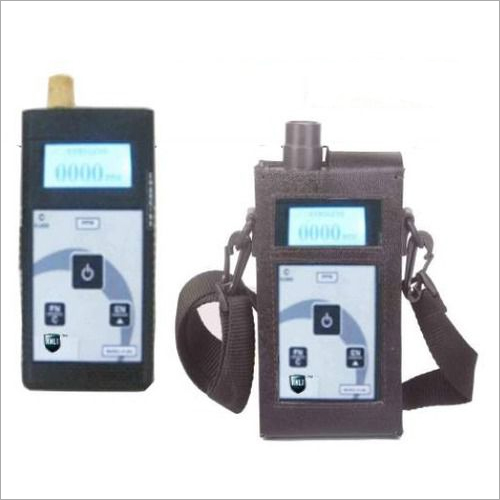
Portable Gas Monitor
Price 15000 INR / Piece
Minimum Order Quantity : 2 Pieces
Interface : Digital Display with Keypad
Technology : Electrochemical & Catalytic Sensors
Size : 150 mm x 75 mm x 35 mm
Special Features : Multiple Gas Detection, Alarm Indication, Data Logging
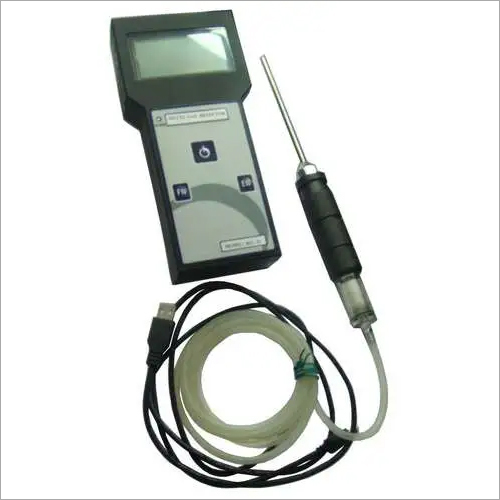
Multi Gas Monitor
Price 40000 INR / Piece
Minimum Order Quantity : 2 Pieces
Interface : Pushbutton interface
Technology : Electrochemical and catalytic sensors
Size : Approx. 120 mm x 65 mm x 30 mm
Special Features : Simultaneous detection of 4 gases, audible and visual alarms, compact and lightweight design
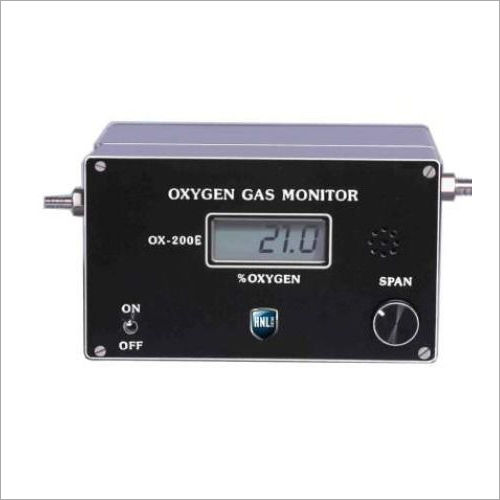
Portable Oxygen Gas Monitor
Price 25000 INR / Piece
Minimum Order Quantity : 2 Pieces
Interface : Single Button Interface
Technology : Electrochemical Sensor Technology
Size : Approx. 120 x 60 x 25 mm
Special Features : Compact and Lightweight, Audible and Visual Alarms, Realtime Display, Userfriendly Operation

 Send Inquiry


Our Products


25/N, Laxmi Industrial Estate, New Link Road, Andheri (W), Mumbai - 400053, Maharashtra, India

Mr Shubhankit G Tiwari
(Sr. Application Engineer )
Mobile :08045801569
 Send Inquiry
 Send SMS
 Call Me Free
Developed and Managed by Infocom Network Private Limited.
 English
 Spanish
 French
 German
 Italian
 Chinese (Simplified)
 Japanese
 Korean
 Arabic
 Portuguese